How to Coordinate Transport for International Delegates in Dubai
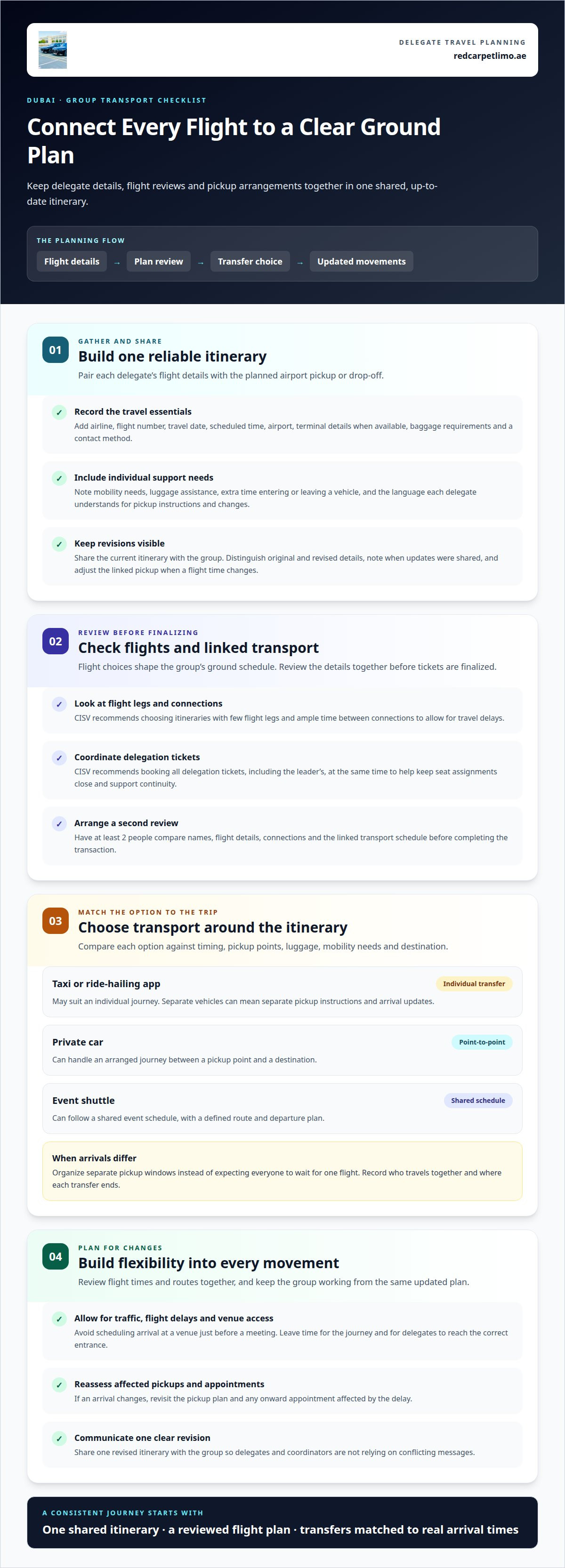
A smooth delegate arrival is planned from the flight details outward. Coordinating transport for international delegates in Dubai starts with sharing airline information, baggage requirements, and updated arrival and departure times with the group. Keep the itinerary together and have at least 2 people review the travel arrangements before tickets are finalized.
When flights, schedules, and ground transport are managed separately, small changes can make arrival and departure plans harder to follow. A clear, up-to-date itinerary gives everyone the same information and helps transport arrangements reflect delegates’ actual travel times.
This guide explains how to gather and update delegate travel details, review flight arrangements, and plan transport around arrivals, departures, and schedule changes. You’ll also learn how to organize pickups and drop-offs in Dubai so the group can travel between the airport and planned destinations with greater clarity and less last-minute uncertainty.
Key Takeaways
- Keep airline details, baggage requirements, and updated arrival and departure times in one itinerary shared with the delegation.
- Review flight flexibility, connection times, and ticket arrangements before finalizing travel plans; have at least 2 people review them.
- Build each pickup and drop-off plan around the group’s schedule, passenger needs, and the locations on its itinerary.
- Choose point-to-point or hourly chauffeur arrangements according to whether delegates need a direct transfer or transport across several scheduled stops.
- Coordinate airport transfers and event transport together to give delegates a clearer, more consistent journey through Dubai.
Table of Contents
Arrival and departure details
Start with a shared movement schedule for each delegate, pairing flight details with the planned airport pickup or drop-off. Record accessibility and language requirements, then allow for road and flight delays when setting transfer times.
-
Gather Arrival and Departure Details
Collect each delegate’s airline, flight number, travel date, and scheduled arrival or departure time. Add the airport, terminal details when available, baggage requirements, and a contact method to one itinerary. Share the current version with the group so delegates and coordinators work from the same information.
Update the itinerary when an airline changes a time or a delegate changes flights. Keep original and revised details distinguishable, and note when each update was shared. If an arrival moves later, for example, revise the associated pickup time instead of leaving the transport plan tied to the earlier schedule.
Share airline information, baggage requirements, and updated arrival and departure times with the group. This gives delegates a common reference and helps the coordinator organize transport around the latest flight information.
-
Assess Accessibility and Multilingual Services
Record each delegate’s mobility needs and preferred language before assigning transport. Plan accessibility arrangements and language assistance around those stated requirements. Don’t assume every delegate can use the same vehicle or communicate comfortably in the same language.
Make each request specific and practical. Note whether a delegate needs help with luggage, more time to enter or leave a vehicle, or clear written pickup instructions. Record the language in which each person can understand meeting points and schedule changes. Share only relevant details with the people coordinating the transfer.
Accessible and multilingual transport for delegates means organizing the journey around mobility and communication needs, rather than relying on one standard arrangement. Include those needs alongside flight details, and make pickup instructions easy to understand before travel day.
-
Anticipate Traffic and Congestion Risks
Build flexibility into airport pickup and drop-off times because road congestion and flight delays can disrupt a tightly timed itinerary. Avoid scheduling a transfer to arrive at a venue just before a meeting. Leave time for the journey and for delegates to reach the correct entrance.
Review the route and scheduled flight times together when preparing each movement. If a flight arrival changes, reassess the pickup plan and any onward appointment affected by the delay. Set a clear process for communicating updates, such as sharing one revised itinerary with the group instead of sending conflicting messages.
Dubai traffic and peak-hour congestion can affect journey times, while a delayed flight can shift the pickup window. Treat both as planning risks: build flexibility into transfers and communicate changes promptly, without promising an exact road arrival time.
Reviewing travel arrangements
Review flight flexibility, connections, ticket coordination, and ground transport before finalizing the delegation’s plans. This is a practical part of coordinating transport for international delegates in Dubai because flight choices shape the ground schedule. Book with enough time to align transport with confirmed flight and event details. The right timing depends on schedule certainty and availability.
-
Compare Delegate Transport Options
Match taxis, ride-hailing apps, private cars, and event shuttles to the group’s itinerary. Compare how each option fits separate journeys, pickup points, and timing requirements. A taxi or app-based trip may suit an individual transfer, while a shuttle can follow a shared event schedule.
Consider the coordination involved, not just the journey itself. Separate vehicles may require separate pickup instructions and arrival updates. A private car can handle an arranged point-to-point journey, while a shuttle needs a defined route and departure plan. If delegates arrive at different times, don’t assume one shared departure will suit everyone.
Use consistent criteria for each transfer: flight timing, luggage, mobility needs, destination, and the effect of a late arrival. This helps you choose an option that fits the actual itinerary rather than an assumed preference.
-
Coordinate Group Transport
Align transport with the delegation’s confirmed flights, host schedule, and destination before tickets are finalized. CISV recommends choosing itineraries with few flight legs and ample time between connections to allow for travel delays. It also recommends booking all delegation tickets, including the leader’s, at the same time to help keep seat assignments close and support continuity.
Connect the group’s flight plan to its ground movements. If several delegates share an arrival, record who travels together and where each transfer ends. If arrivals differ, organize separate pickup windows instead of expecting everyone to wait for one flight. Keep changes visible in the shared itinerary.
Before completing the transaction, arrange for at least 2 people to review the travel arrangements. They can compare names, flight details, connections, and the linked transport schedule, then flag mismatches before they affect the group.
-
Book Transport and Gather Required Details
Start arranging transport as soon as flight schedules and event dates are firm enough to plan around. There’s no single booking lead time for every delegation: availability, schedule certainty, group size, and separate movements all affect when to make arrangements. Avoid waiting until ticket changes leave little time to coordinate pickups.
Prepare passenger names, flight details, arrival and departure times, pickup and drop-off locations, luggage requirements, and mobility needs. Include the host program’s schedule and a contact method for travel updates. These details help align each transfer with the itinerary, rather than a provisional plan.
Use this sequence to make coordinating transport for international delegates in Dubai less dependent on last-minute decisions. If airfare prices differ substantially or suitable dates and times aren’t available, the travel coordinator or delegation leader should contact the host program. Record the outcome and update the shared schedule before finalizing related ground transport.
How can organizers coordinate group transport for delegates in Dubai?
Build a movement plan around delegate groups, hotels, and event venues. In Dubai, connect each transfer to a defined pickup point, a specific destination, and a clear schedule.
- Group delegates by shared departure point and destination. For example, put delegates staying at the same hotel in one movement group when they’re attending the same venue session. Keep groups with different schedules separate rather than delaying one cohort for another. Match each group with transport suited to its confirmed passenger and luggage requirements, without assuming every vehicle can accommodate the same load.
- Assign a movement coordinator to each transfer window. The coordinator maintains the group roster, shares pickup instructions, and communicates schedule changes to delegates and the transport team. Name a clear meeting point, such as the hotel entrance designated for departures, instead of saying “meet outside.” For a return from a venue, specify the agreed exit or collection point.
- Arrange movements in itinerary order. Map each leg from the hotel to the first venue, then connect later venue visits and the return journey. Include event start and finish times, plus the time delegates need to gather before departure. If a session ends late, update the return plan instead of relying on the original collection time. Record each change in the shared movement schedule.
- Use a clear passenger check-in process at every pickup. The coordinator can check delegates against the group roster before departure and report anyone who hasn’t arrived. For example, at a Dubai hotel pickup, confirm the group is assembled before the vehicle leaves for the venue. This helps prevent missed passengers and makes it easier to identify who still needs assistance.
- Plan how the group will respond to changes. If a venue schedule shifts or a delegate joins a different movement, update the roster, pickup point, and destination together. Send revised instructions to affected delegates and the transport team, then remove outdated details from the shared schedule. For airport transfers through DXB, keep the airport journey separate from hotel-to-venue movements so each group receives instructions for its own leg.
For delegates traveling between Dubai hotels and event venues, a written plan, named coordinator, and consistent update process help connect each transfer to the event schedule. Revisit the movement plan whenever the itinerary changes.
What transport options connect Dubai hotels, venues, and major business districts?
- Map each journey before selecting a mode of transport. List the hotel, venue, business district, pickup point, and required arrival time for every transfer. For example, a delegate staying near Downtown Dubai and attending a meeting in DIFC needs a direct route between those locations, not a generic city itinerary. Group movements by destination and schedule so the transport plan reflects the actual day.
Consider public transport for delegates traveling independently, and arranged vehicles when the group needs a shared pickup or coordinated arrival. The right choice depends on the itinerary, luggage, mobility requirements, and how closely delegates need to arrive together.
- Use direct point-to-point journeys for a defined trip between a hotel and one venue. This suits a delegate with a fixed meeting location, such as travel from a hotel to Dubai World Trade Centre. Give passengers an exact pickup point and destination entrance. Clear locations help avoid confusion between nearby buildings or multiple venue access points.
For a schedule with several stops, plan each leg in sequence instead of treating the day as one transfer. Record when the group leaves the hotel, which venue comes next, and where the final drop-off should be. This makes changes easier to communicate if a meeting moves.
- Assess public transport, taxis, and ride-hailing for journeys where delegates travel separately. These options may suit individual trips between a hotel and a business district, especially when each person has a different appointment. Share the destination name and an agreed meeting location, such as a hotel entrance or venue reception, rather than relying on a district name alone.
Don’t assume separate arrivals will work for a group presentation or shared event start. If delegates need to arrive together, align their departure plan and provide consistent pickup instructions. Consider accessibility and luggage needs before assigning transport.
- Account for the full itinerary, not just the first ride. A delegate may travel from a hotel to DIFC, then continue to an event at Dubai World Trade Centre. Map each transition and allow for meeting durations and collection points. Don’t add an unplanned stop without updating the people coordinating the movement.
Review the route plan whenever a hotel, venue, or appointment changes. Send affected delegates one revised version with the updated location and departure details. For a curated, direct journey between Dubai locations, arrange point-to-point transport around the event itinerary.
Red Carpet Limousine: Corporate Event Transportation
Red Carpet Limousine provides Corporate Event Transportation for organizers coordinating delegate movements between Dubai hotels, venues, and business meetings. It’s a natural fit when the event schedule calls for planned transfers rather than separate, uncoordinated journeys.
For airport arrivals and departures, Airport Transfers (DXB & AUH) connect delegates with their onward plans. Point-to-Point Transfers suit a defined trip between locations, while Hourly Chauffeur Service can support an itinerary with several scheduled stops. Share the travel schedule, pickup and drop-off points, and relevant passenger requirements so the transport plan reflects the event’s actual movements.
Choose the arrangement that matches the delegation’s schedule: a direct transfer for one journey, or chauffeur service for a day with multiple planned movements. For corporate event transportation in Dubai, contact Red Carpet Limousine to discuss your itinerary.
Set the Next Delegation Up for a Confident Arrival
Turn the event schedule into a practical movement plan delegates can follow. Treat transport as part of the guest experience, not a separate task: clear instructions, considered timing, and a consistent point of contact help people focus on the purpose of their visit. For future events, keep the structure that worked and refine it around the next group’s itinerary.
Thoughtful coordinating transport for international delegates in Dubai also means planning for change without making every adjustment feel disruptive. Keep communication concise, make revised instructions easy to identify, and ensure each transfer supports the day’s priorities. These principles help organizers manage delegate movements with greater clarity and composure.
Red Carpet Limousine can help shape transport around your corporate event itinerary. Contact Red Carpet Limousine to coordinate transport and discuss the next step for your delegation. A well-considered journey gives your event a composed start and a confident finish.
Frequently Asked Questions
What transport options are available for international delegates in Dubai?
Delegates can use Dubai’s public transport, ride-hailing apps, or pre-booked private chauffeur transfers. The suitable option depends on whether someone is traveling alone, carrying event materials, or moving between several scheduled appointments. For example, a delegate with one hotel-to-venue journey may need a direct transfer, while an executive attending meetings at different locations may benefit from an hourly arrangement. Organizers can plan different modes for different parts of the itinerary.
How much do airport transfers and chauffeur services cost in Dubai?
Costs depend on the vehicle class, distance, and whether the booking is point-to-point or time-based. Parking, extended waiting, inter-city mileage, and special requests are quoted separately and agreed before booking. VAT is charged at 5%. The exact total is confirmed in writing before you book, and most quotes are answered within 10 minutes. Rates apply within Dubai; provide the journey details to receive a quote for your itinerary.
Which Dubai airport arrival procedures and pickup points should event organizers know?
For a DXB or AUH arrival, give each delegate the airport, terminal, flight details, and specific pickup instructions in their transfer information. Avoid naming a generic meeting point that could be unclear across terminals. Tell delegates to follow airport signs and the directions provided for their arranged pickup. Include a contact method for communicating changes, and keep airport transfer instructions separate from hotel or venue transport details.

Disclaimer
The information provided on this website is for general informational purposes only. While Red Carpet Limousine LLC strives to keep all content accurate and up to date, vehicle availability, pricing, offers, and service details may change without notice. Images shown are for illustrative purposes only and actual vehicles may vary. For the latest information and confirmed bookings, please contact Red Carpet Limousine LLC directly.