Managing Event Transportation Logistics in Dubai
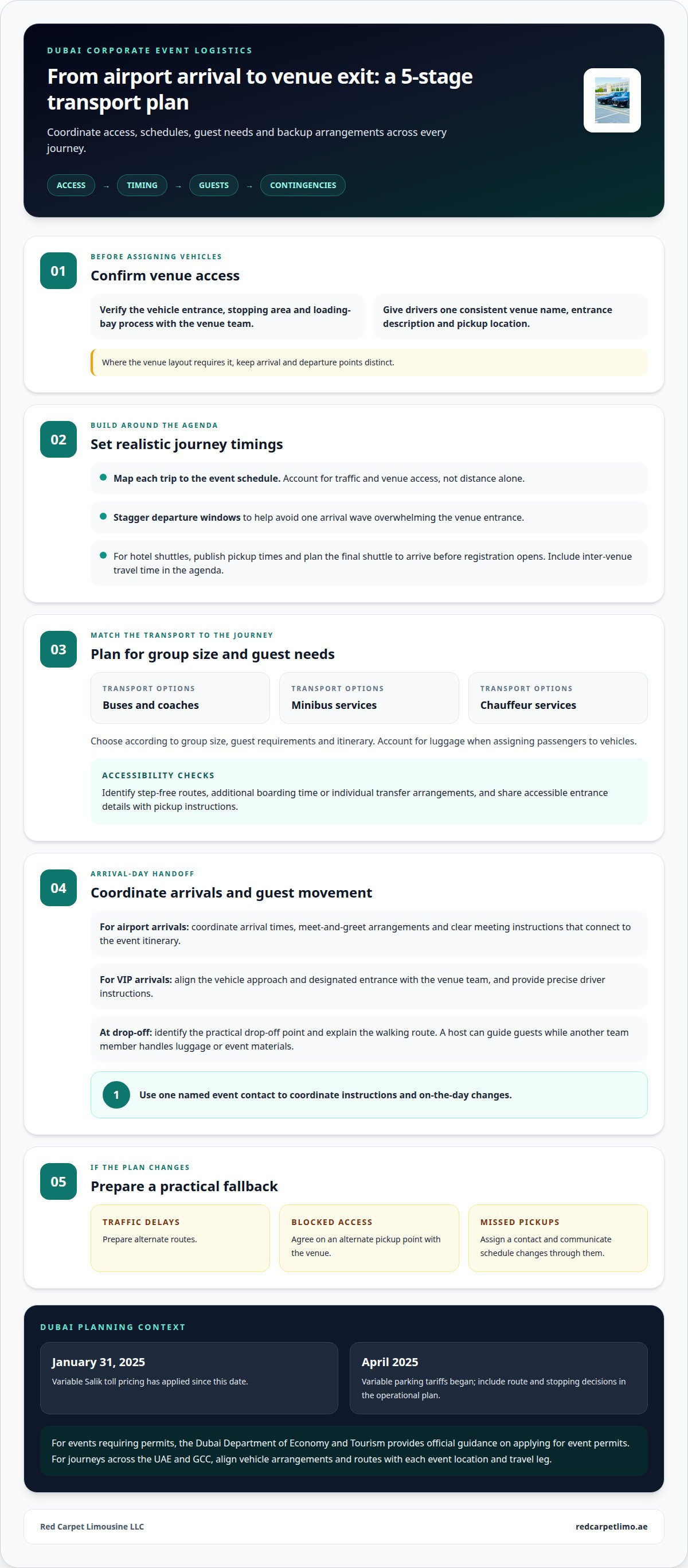
A well-run event transport plan depends on clear pickup points, realistic schedules and coordinated routes between airports, hotels and venues. A strong approach to managing logistics for event transportation in Dubai also accounts for guest accessibility, luggage needs and transfers between emirates, so attendees know where to go and how each journey fits the event schedule. For large groups, shuttle or chartered transport can help keep arrivals organized and participants moving together.
When guests arrive from different countries or travel onward across the UAE and GCC, transport coordination is part of the guest experience, not just a final scheduling task. Plan airport transfers and meet-and-greet arrangements, account for mobility needs and luggage, and coordinate journeys across multiple locations. Match transport to group size and event requirements to create a practical plan from arrival through departure.
Key Takeaways
- Build the event transport plan around venue access, arrival patterns and route timing, not distance alone.
- Plan for mobility requirements and luggage needs when matching guests with suitable transport arrangements.
- Coordinate airport arrivals with clear meeting instructions and a transfer schedule that connects smoothly to the event itinerary.
- For journeys across the UAE and GCC, align vehicle arrangements and routes with each event location and travel leg.
- Choose point-to-point, hourly or full-day chauffeur service according to how much coordination the event schedule requires.
Table of Contents
Why Corporate Event Transportation Matters?
Corporate events in Dubai often connect hotels, airports, and venues on tight schedules. Transport options include buses and coaches, minibuses, and chauffeur services. Match the vehicle to group size, guest needs, and the itinerary, then coordinate routes and pickup instructions centrally.
Traffic and venue access affect timing as much as distance. When managing logistics for event transportation in Dubai, map each trip against the event agenda, identify approved arrival points, and allow for traffic. Staggered departure windows can prevent one arrival wave from overwhelming the venue entrance. Give each passenger clear pickup and schedule details, and name an event contact for coordination on the day.
Loading zones need a separate plan. Confirm the vehicle entrance, stopping area, and loading-bay process with the venue team before sharing driver instructions. A hotel ballroom and a large exhibition venue may have different access routes and drop-off points. Give drivers a consistent venue name, entrance description, and pickup location. Keep departure and arrival points distinct when the venue layout requires separate routes.
Dubai’s Salik toll pricing has been variable since January 31, 2025, and variable parking tariffs began in April 2025. These conditions make route and stopping decisions relevant to the operational plan, not just the map. Organizers can coordinate planned routes with transportation providers and account for venue parking arrangements. For events requiring permits, the Dubai Department of Economy and Tourism provides official guidance on applying for event permits.
Accommodation and inter-venue shuttles work best as one connected schedule. For a conference route between one venue and two hotels, set pickup points at each property, publish departure times, and schedule the final shuttle to arrive before registration opens. For sessions at multiple venues, include travel time in the agenda so attendees are not left to arrange their own last-mile transport.
Last-mile planning matters when vehicles cannot stop directly beside an event entrance. Identify the nearest practical drop-off point, explain the remaining walking route, and account for guests carrying luggage or event materials. At a product launch, for example, separate guest arrivals from equipment handling to reduce congestion. A backup plan should cover traffic delays, blocked access, and missed pickups: assign a contact, communicate changes, and agree on an alternate pickup point with the venue.
The main risks are traffic delays, crowded loading areas, unclear pickup instructions, and changes to planned access. Prepare alternate routes and pickup points, stagger arrivals, and communicate schedule changes through one event contact. These steps help keep corporate transport coordinated when timing or access changes.
Transport options include bus and coach companies, minibus services, and chauffeur services.
Accessibility, luggage handling, and guest experience
For an international audience, a smooth arrival involves more than the vehicle journey. Plan guest movement around access needs, luggage, event permits, and each venue’s entry arrangements.
VIP Arrival Coordination
For VIP arrivals, coordinate the passenger’s arrival time, vehicle approach, and designated entrance with the venue team. A separate pickup or drop-off point can help keep guest access distinct from general event traffic. Share precise driver instructions, the meeting location, and the event contact through one consistent channel. For a product launch, this creates a clear handoff from vehicle arrival to the host team without adding uncertainty for guests.
Venue access can depend on event-specific arrangements. The Dubai Department of Economy and Tourism provides official guidance on applying for event permits. Include permit planning in the event timeline, then coordinate transport access with the venue and event team. Confirm which entrances and stopping areas are available, and communicate restrictions to the transport coordinator and drivers. This helps prevent vehicles from arriving at an entrance outside the access plan.
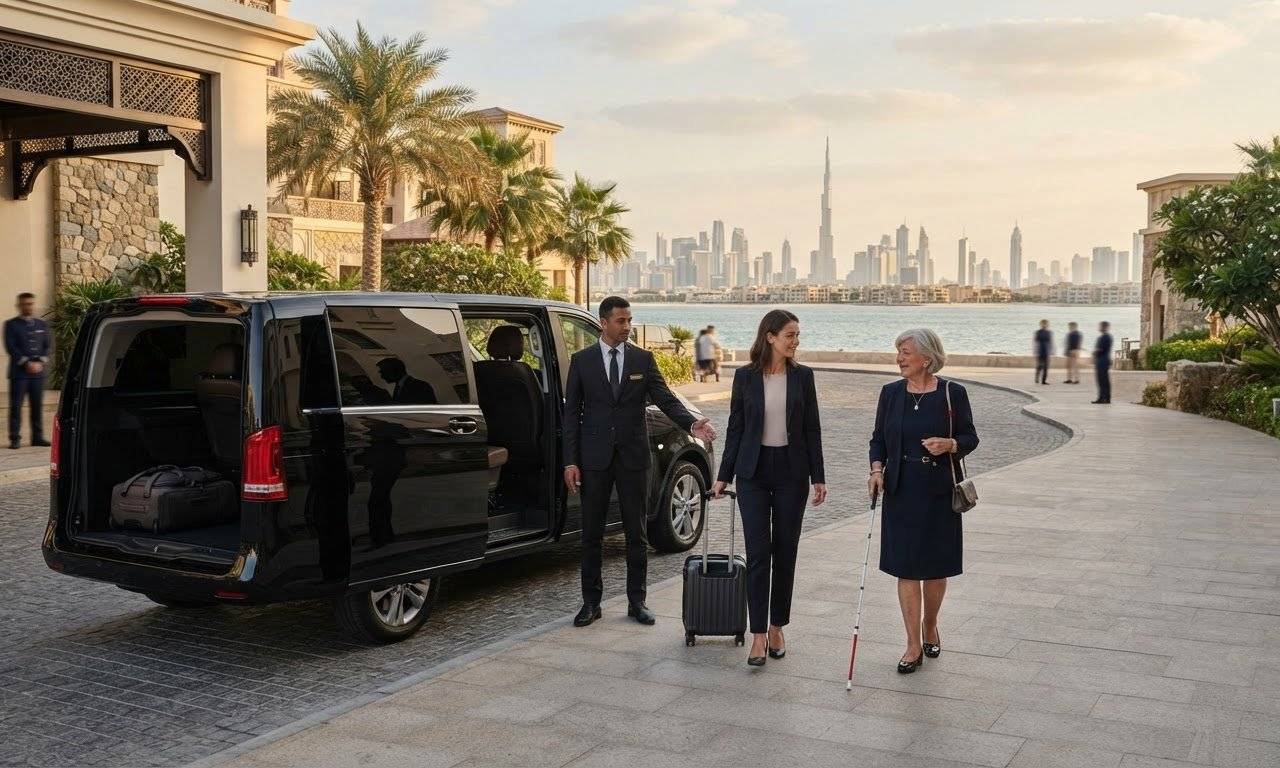
Consider accessibility when assigning transport and planning the guest journey. Identify whether attendees need step-free routes, additional boarding time, or an individual transfer arrangement. Share accessible entrance details alongside pickup instructions. ETSI identifies accessible taxi services and information about public-transport accessibility as transportation support for meeting participants. Including these details helps guests understand their journey options.
Luggage Handling and Guest Experience
Luggage affects both vehicle allocation and arrival timings. For international guests travelling from the airport to a hotel or venue, account for bags when assigning passengers to vehicles. Where practical, separate event materials from personal luggage and identify who handles each item at drop-off. Clear instructions help prevent bags being left at the wrong entrance or delaying the next scheduled journey.
At registration, a host can direct guests from the drop-off point to the correct entrance while another team member handles luggage or event materials. This division helps when a venue has a long approach or separate arrival and loading areas. Include the walking route in guest instructions, using a named landmark or entrance rather than a vague direction. Transport, reception, and luggage arrangements work best as one coordinated sequence.
Before arrival day, consolidate accessibility details, approved entrances, and luggage instructions in a shared transport brief. Give the same version to the venue coordinator, host team, and drivers. If the venue changes its access arrangements, update the brief and communicate the change through the event contact. This handoff supports consistent guest handling from pickup to arrival.
Airport transfers and meet-and-greet coordination
Dubai event transport can include airport transfers, private cars, vans, minibuses, buses, and coaches. The right mix depends on passenger needs, group size, luggage, and the event schedule.
On-Site Coordination and Guest Routing
At Dubai International Airport, send arriving guests consistent meeting instructions before their journey. Include the terminal, meeting point, event contact, and destination in each message. Match each passenger or group with the right vehicle and hotel or venue transfer. If flights arrive close together, keep arrival details separate so guests are directed to the correct driver and pickup point.
Meet-and-greet coordination continues after guests reach the venue. Assign an on-site contact to receive arrival updates, guide passengers from drop-off to registration, and relay changes to the transport team. Include the venue’s named entrance and agreed stopping location in driver instructions. A clear route from vehicle to reception helps international delegates, especially when the conference schedule begins soon after arrival.
An illustrative Dubai tech-conference case reported 95% on-time transfers. For an event plan, treat flight arrival information, pickup instructions, and venue access as connected details. If a delay affects a passenger’s transfer, communicate the revised pickup arrangement to the relevant driver and event contact. That keeps the update focused on the affected journey rather than confusing every guest.
Transportation Coordination
Choose transport around passenger volume and the type of journey. For medium groups, minibuses or vans with 8-18 seats can serve shared routes; buses or coaches with 40-60 seats suit large delegated groups. Private cars can accommodate individual guests or VIP arrivals. For conferences, map each vehicle movement against flight arrivals, hotel departures, event start times, and available parking.
Air freight needs a separate coordination plan from passenger transport. Identify which event materials are arriving by air, who receives them, and where they need to go. For global events that require specialized freight handling or warehousing support, platforms like warenous.com connect businesses with pre-screened third-party logistics providers. Align the freight handoff with venue access and setup timing, and keep cargo instructions separate from guest pickup messages. Display equipment, for example, may need to go to a service entrance while delegates use the main arrival point.
For corporate events with several arrival waves, maintain one transport schedule showing passenger groups, flight details, pickup points, destinations, and the contact responsible for updates. Coordinate route changes with drivers and venue staff when traffic or access affects timing. Keep a contingency route and alternate pickup location in the same plan. This structured coordination supports timely transfers while preserving a composed, luxury arrival experience.
Event logistics across the UAE and GCC
A multi-location event needs one transport plan linking destinations, travel modes, and venue schedules. Across the UAE and GCC, include every leg in the itinerary rather than treating Dubai as the only movement hub.
Start with an event map listing each venue, hotel, airport, and scheduled activity. Then group attendees by destination and arrival window. A Dubai conference with sessions in another emirate, for example, needs a clear transfer sequence between the first venue, accommodation, and the next event location. Assign a coordinator to each leg and keep the itinerary consistent for attendees, drivers, and venue teams.
Choose vehicles around the group and journey. For large delegated groups, buses or coaches with 40-60 seats can support shared transfers. Minibuses and vans suit medium-sized teams, while individual journeys may need a different arrangement. Reserve transportation in advance to plan preferred options and align vehicles with the event schedule. The vehicle choice should account for passenger numbers, luggage, pickup locations, and the route between venues.
Route planning across emirates matters because changing destinations affects departure times, pickup arrangements, and venue access. Coordinate routes with transport providers and account for journey duration. For each event day, show the starting point, destination, planned stops, and responsible contact. For concerts, exhibitions, and product launches, separate attendee journeys from equipment deliveries so both reach the correct venue entrance.
Across the GCC, map the full journey before choosing transport modes. The United Nations identifies options including driving, flying, ferrying, biking, scooting, and public transportation. An itinerary can combine modes, such as an international flight followed by a ground transfer to a hotel or venue. Show each connection, meeting point, and handoff in the schedule so attendees can follow the sequence.
Events outside central areas need extra attention to the final venue approach. Confirm the arrival point with the venue team, identify the route to registration, and share practical directions with attendees. For an outdoor team-building event, include the venue location and planned drop-off point in transport instructions. Keep an alternate route in the coordination plan and communicate changes through one named contact.
For organizers planning event travel between Dubai and other UAE or GCC destinations, coordinate your event transportation around the complete itinerary, not isolated transfers. A single route plan helps connect attendees, venues, and scheduled activities with greater clarity.
Red Carpet Limousine: Corporate Event Transportation
Red Carpet Limousine supports corporate event journeys with airport transfers, point-to-point travel, and chauffeur services arranged around the itinerary. For guests arriving through DXB or AUH, an airport transfer provides a direct journey to their hotel or venue. Point-to-point transfers suit scheduled journeys between locations, while hourly or full-day chauffeur service can support programmes with several stops or changing timings.
Share the itinerary, pickup and destination details, and planned venue movements when arranging transport. This helps match the service to the event schedule and guest journey. Choose point-to-point travel for a single transfer, or consider hourly or full-day service for a day with multiple engagements.
Contact Red Carpet Limousine to discuss transport for your corporate event.
Shape the Next Event Journey
Make transport planning part of the event design from the outset. A clear itinerary gives your team a practical basis for coordinating guest movements, venue transitions, and travel beyond Dubai. It also helps match the service to each journey, whether guests need a direct transfer or a chauffeur for a changing schedule.
For managing logistics for event transportation in Dubai, Red Carpet Limousine offers Airport Transfers (DXB & AUH), Point-to-Point Transfers, and Hourly Chauffeur Service. Share your event itinerary and transport requirements to discuss an arrangement suited to your schedule.
Contact Red Carpet Limousine to plan transportation for your next event. A considered journey can help your guests arrive ready to take part.
Frequently Asked Questions
How do you estimate transport capacity and vehicle requirements for a Dubai event?
Estimate capacity for the busiest travel window, not total attendance alone. Group guests by destination, arrival time, luggage, and mobility needs, then compare those groups with vehicle capacity and journey duration. A conference with two hotels, for example, may need separate routes if guests arrive at different times. Account for vehicle turnaround and venue access so assignments reflect the actual movement schedule.
What permits and regulations apply to event shuttles and charter buses in Dubai?
The Dubai Department of Economy and Tourism provides official guidance on event permits. Treat event approval and transport arrangements as related but separate planning matters. Document the event dates, venues, passenger movements, and proposed vehicle access, then align transport with the approved event plan and venue conditions. Shuttle and charter-bus requirements depend on the service and operation, so do not assume one event permit covers every transport activity.
How do RTA rules affect event transport routes, pickup zones, and parking?
For Dubai events, include route, stopping, and parking constraints in the transport plan instead of assuming vehicles can wait at any entrance. Map approved pickup and drop-off points with the venue, and include them in driver instructions. Keep vehicle approaches separate from pedestrian routes where the venue plan allows. For a busy exhibition, designate a holding or parking arrangement that does not obstruct guest arrivals.
How can organizers coordinate airport transfers for event guests arriving in Dubai?
Coordinate airport transfers using each guest’s flight arrival, destination, and event schedule. Create a transfer record for each passenger or group, including arrival details, hotel or venue, and event contact. Link updates to the relevant journey so one delayed arrival does not confuse arrangements for other guests. For international delegates, send concise meeting instructions before departure, including the agreed airport meeting point and onward destination.
What are the best practices for managing traffic, arrivals, and departures at Dubai venues?
Use separate operating plans for arrivals and departures, as their traffic peaks may differ. Assign arrival sequences to guest groups and departure sequences to vehicles, then coordinate both with the venue’s access arrangements. A conference can release attendees by destination or session schedule instead of sending everyone to the pickup area at once. Give the event transport lead responsibility for relaying changes to venue staff and drivers.
How should event organizers plan accessible transportation in Dubai?
Plan accessible transportation by identifying guest requirements early and matching them to the complete journey, from pickup through venue entry. Consider boarding needs, luggage, walking distance, drop-off location, and the route to registration. Include accessibility details in transport instructions, not just general event information. ETSI identifies accessible taxi services and public-transport accessibility information as transportation support for meeting participants, offering useful context when mapping guest travel options.

Disclaimer
The information provided on this website is for general informational purposes only. While Red Carpet Limousine LLC strives to keep all content accurate and up to date, vehicle availability, pricing, offers, and service details may change without notice. Images shown are for illustrative purposes only and actual vehicles may vary. For the latest information and confirmed bookings, please contact Red Carpet Limousine LLC directly.