Quietest Luxury Cars for Chauffeuring: How to Compare Cabin Comfort
The most prestigious badge doesn’t, by itself, identify the calmest chauffeured cabin. The quietest luxury cars for chauffeuring are best compared by measuring cabin noise at the same speed, such as 100 km/h, under comparable conditions. A sound reading is useful, but it doesn’t tell the whole story: road surface, tyres, cabin configuration and hands-free audio can all shape the experience.
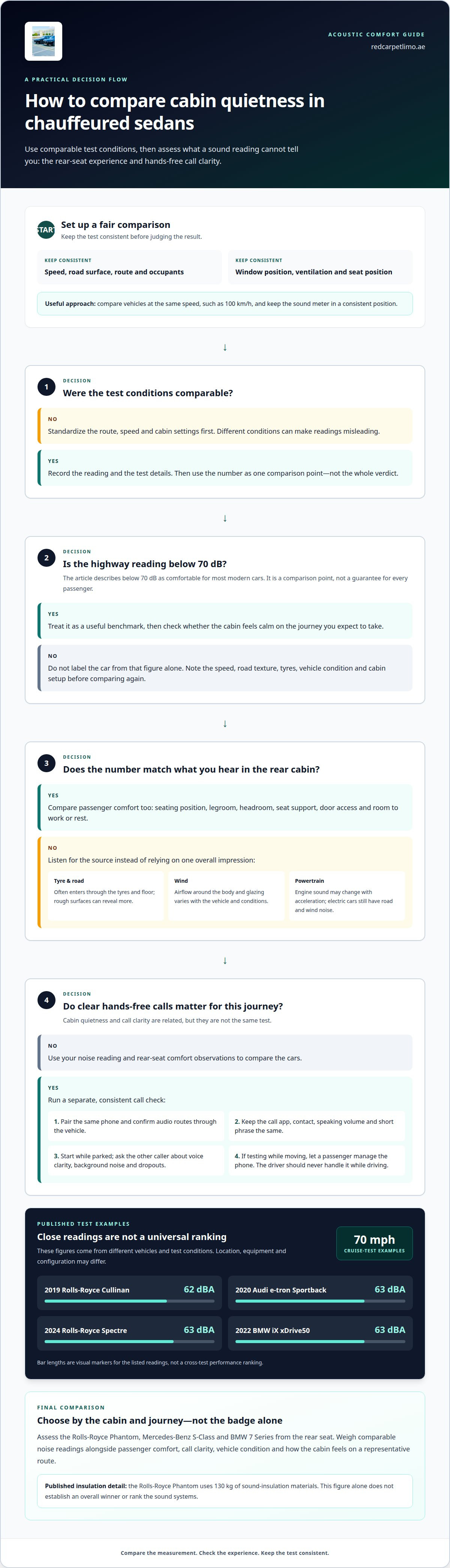
A quiet ride matters when you want to work, take a call or arrive without the strain of a noisy journey. But a hushed cabin and clear call audio are not the same thing, so a fair comparison considers both.
This guide explains how to compare noise readings, assess sound insulation and noise cancellation, and test call clarity consistently. It also considers three quiet-luxury sedan names often on a shortlist: the Rolls-Royce Phantom, Mercedes-Benz S-Class and BMW 7 Series. You’ll come away with a practical way to weigh measured sound against the comfort you experience in the rear cabin, then choose the sedan that best suits your chauffeured journeys in the UAE.
Key Takeaways
- Compare cabin-noise readings at the same speed and under similar conditions; otherwise, the figures may not tell you which cabin is quieter.
- Separate measured sound levels from your own impression of calm, since road surface, tyres and cabin setup can change what you hear.
- Assess passive insulation and active noise cancellation as different parts of the cabin-comfort picture.
- Test hands-free call clarity separately from cabin quietness, keeping the phone, call setup and speaking volume consistent.
- Compare the Rolls-Royce Phantom, Mercedes-Benz S-Class and BMW 7 Series by the comfort factors that matter most to your chauffeured journey.
Table of Contents
1. Cabin noise measurement and comfortable noise levels
Compare luxury chauffeur cars at the same speed, on similar road surfaces, with windows closed and ventilation settings consistent. A reading below 70 dB on the highway is described as comfortable for most modern cars. The figure is a comparison point, not a guarantee of comfort for every passenger. A single cabin reading also cannot represent every UAE journey, where road texture, speed, tyres and vehicle condition vary.
Published tests offer useful examples, but their conditions matter. Published cabin-noise readings can offer useful comparisons, but their value depends on comparable test conditions. A 2019 Rolls-Royce Cullinan recorded 62 dBA at a 70-mph cruise. A 2020 Audi e-tron Sportback recorded 63 dBA at 70 mph, while a 2024 Rolls-Royce Spectre recorded 63 dBA at the test track, also at 70 mph. These figures suggest closely grouped results, not a universal ranking: test location, equipment and vehicle configuration may differ.
Road noise usually reaches the cabin through tyres and the vehicle floor, and becomes especially noticeable at 60-70 km/h and above. Wind noise comes from airflow around the body and glazing; its level varies with the vehicle and conditions, so there is no general basis for saying it is twice as loud at 110-120 km/h as at 90 km/h. Engine noise comes from the powertrain and may change with acceleration. These sounds have different causes, so a quiet cruise does not necessarily mean every sound is equally well controlled.
Electric vehicles change the mix rather than eliminating cabin noise. The Audi e-tron Sportback and Rolls-Royce Spectre have no combustion-engine sound, but tyre, road and wind noise remain relevant at highway speeds. Their 63 dBA readings at 70 mph provide a comparison example, not proof that electric cars are always quieter than petrol-powered cars. The figures of 80 dBA, 25% and 11% should not be treated as established general effects without reliable supporting evidence and context. Exposure above 70 dB alone does not establish a particular level of driver fatigue, reduced concentration or accident risk.
To compare the quietest luxury cars for chauffeuring fairly, note the reading, speed, road surface, window position and ventilation setting. Compare vehicles at the same speed, such as 100 km/h, and keep the sound meter in a consistent position. Separate the published number from your own impression of cabin calmness; both matter, but they describe different things.
UAE chauffeur and limousine licensing requirements are separate from cabin-noise measurements. Noise figures alone cannot establish whether a vehicle or chauffeur meets applicable requirements.
2. Test-driving and comparing cars for acoustic comfort
A fair test needs the same route, occupants and cabin settings. Drive each candidate at a steady speed on a similar road surface, then note changes in tyre hum, wind rush and vibration. The 2022 BMW iX xDrive50 recorded 63 dBA during a 70-mph cruise test, but that result describes that tested vehicle and setup. Model year, trim, tyres, cabin configuration and vehicle condition can all change the experience.
For a useful comparison, keep a short record for each drive. Note the vehicle, road surface, approximate speed, window position, ventilation setting and seat position. Listen separately for tyre noise, airflow around the doors and mirrors, and vibration through the seat or floor. A rough road may reveal tyre noise that a smooth test route conceals.
Rear-seat comfort and space depend on more than the model badge. Compare the seating position, legroom, headroom, seat support, door access and how easily passengers can work or rest. The Rolls-Royce Phantom, Mercedes-Benz S-Class and BMW 7 Series are relevant flagship sedans to assess from the rear seat. Choose based on your passengers’ needs and how the cabin feels during a representative journey, rather than assuming a name guarantees the best fit.
Call clarity deserves a separate test. A quiet cabin does not guarantee the other caller will hear you clearly; the hands-free system and microphone setup matter too. Pair the same phone with each car, confirm that audio routes through the vehicle, and use the same call app, contact, speaking volume and short phrase. Start while parked, then ask the other caller to assess voice clarity, background noise and dropouts.
If you assess a call while moving, let a passenger manage the phone. The driver should never handle a phone while driving. Record the windows, ventilation, road surface and approximate speed during each test, since these conditions can affect what the other caller hears. This makes comparisons more useful than relying on a quick impression from one call.
There is no single maintenance-cost figure that fits every luxury chauffeur car in the UAE. Model year, trim, mileage, service history, parts and wear items all affect upkeep. Reliability also depends on the vehicle’s condition and fitted systems. Tyres, climate control and hands-free equipment can influence comfort and daily use. Cars of the same model can differ significantly, so compare maintenance history and condition alongside rear-seat comfort and cabin noise.
3. Active noise cancellation and passive sound insulation
For rear-seat insulation, the Rolls-Royce Phantom has a concrete published detail: it uses 130 kg of sound-insulation materials. The Phantom, Mercedes-Benz S-Class and BMW 7 Series are useful sedans to compare, but the available figure alone doesn’t establish an overall winner or rank their sound systems.
Passive insulation reduces sound entering the cabin through physical barriers. Materials in the doors, floor and glazing can help limit road, tyre and wind noise. Door and window seals matter too, because gaps can let exterior sound in. From the rear seat, listen near the doors, floor and wheel areas as the car travels over different surfaces. A quiet stretch of smooth road may conceal noise that becomes obvious on coarser pavement.
Active noise cancellation works differently. Microphones detect certain low-frequency sounds, and the system produces opposing sound waves through the vehicle’s audio equipment. This can reduce some steady noises, such as a persistent hum, but it does not replace physical insulation. Wind rush, sharp impacts and changing road sounds present different challenges. Assess the result from the passenger seat, where the system may sound different from the driver’s position.
If the vehicle offers active cancellation, compare it with the system switched on and off. Keep speed, route, ventilation and audio volume consistent. Note whether it reduces a continuous drone or changes the sound balance. A quieter low-frequency hum does not mean every road or wind sound has disappeared.
Assess the sound system separately from insulation. Play the same familiar spoken recording or music at a low, comfortable volume in each sedan. From the rear seat, listen for clear speech, balanced sound and distortion. Then pause playback: without audio masking tyre or wind noise, cabin quietness is easier to judge. Premium branding alone does not establish how well a particular rear-seat setup performs.
For a practical comparison, record three observations for each car: exterior noise heard in the rear, the effect of active cancellation, and audio clarity at low volume. Keep the vehicle’s model year, trim and cabin settings with those notes, since equipment can vary. The Phantom’s 130 kg insulation figure offers a specific point of reference; a like-for-like ride tells you more about your own comfort.
4. Quiet luxury sedans: Rolls-Royce Phantom, Mercedes-Benz S-Class and BMW 7 Series
The Rolls-Royce Phantom, Mercedes-Benz S-Class and BMW 7 Series belong on a chauffeur-focused sedan shortlist. But a prestigious name doesn’t establish which cabin will feel quietest to a particular passenger. Compare the rear-seat experience, sound profile and practical fit for the journey, then treat measured readings as supporting evidence rather than a complete verdict.
The Phantom has a specific insulation figure: 130 kg of sound-insulation materials. That makes it a useful example of how manufacturers may address cabin sound through physical materials. It doesn’t, by itself, prove the quietest result in every setting. In a passenger assessment, notice whether road and wind sounds interrupt conversation, reading or rest, and whether different road surfaces change the cabin’s character.
The S-Class and 7 Series also merit direct comparison as flagship sedans, particularly from the rear seat. Consider how easily you settle into the seat, the space available for your posture, and whether the cabin suits working or unwinding. Avoid assuming one model wins without matching the tested versions and conditions. Equipment and configuration can vary, so a model name alone cannot guarantee the same acoustic result across every vehicle.
Make the comparison relevant to your own use. For a quiet ride between meetings in Dubai, clear speech and low background noise may matter most. On a longer intercity journey, sustained comfort, seat support and noise over changing road surfaces may take priority. A short urban drive can reveal door and traffic sounds, while a steady cruise gives a better sense of continuous wind and tyre noise.
Keep a simple decision record for each sedan. Note your rear-seat position, the road type, which sounds stand out, and whether you can converse comfortably without raising your voice. Assess call clarity separately at a restrained volume. A strong sound system can make music more enjoyable, but it is not a substitute for insulation and should not be used to mask unwanted cabin noise.
Use this order to reach a practical choice: first identify the passenger’s priority, then compare the same type of journey, and finally weigh the car’s measured readings against the lived experience. The Phantom’s insulation detail offers one concrete comparison point; the S-Class and 7 Series should be judged by their actual rear-seat comfort and sound on your route. For a chauffeured sedan journey, explore sedan travel options suited to your plans.
Red Carpet Limousine
Red Carpet Limousine LLC helps you turn your cabin-comfort priorities into a chauffeured journey, whether you value a quiet rear seat for calls, focused work or a restful ride. Its Mercedes-Benz S-Class and BMW 7 Series Chauffeur Services offer familiar sedan options, while the right booking format depends on your itinerary.
Choose Point-to-Point Transfers for a direct journey, an Hourly Chauffeur Service for multiple stops, or a Full Day Chauffeur Service when you need transport across a longer schedule. Airport Transfers are available for DXB and AUH arrivals and departures. Share your route and preferences when arranging your journey so the service can align with your plans.
For a composed journey in Dubai or elsewhere in the UAE, contact Red Carpet Limousine LLC to discuss your chauffeur requirements.
Make Cabin Comfort Part of the Journey
Choosing among the quietest luxury cars for chauffeuring means matching the ride to your day. Consider whether you are travelling straight to a meeting, moving between appointments or settling in after a flight. Your schedule, route and priorities can guide a more considered chauffeur booking.
In Dubai and across the UAE, Red Carpet Limousine offers airport transfers to and from DXB, DWC and AUH, Point-to-Point Transfers and Hourly Chauffeur Service. Share the purpose of your journey and your preferred sedan when requesting a quote, so the booking can reflect your priorities, whether you need time to prepare, space to unwind or a composed arrival.
Choose the journey format that suits your plans, then take the next step with Contact Red Carpet Limousine. A thoughtfully planned ride can leave you better placed to focus on what comes next.
Frequently Asked Questions
How should you compare your shortlist fairly?
Compare equivalent versions of each car against your own passenger needs. Trim, model year and rear-seat layout can change the experience, so a model name alone is not a complete specification. Before deciding, identify what matters most: quiet conversation, room to work or an undisturbed ride. This keeps the comparison focused on the journey you need, rather than prestige alone.
What Makes a Luxury Car Quiet Enough for Mobile Business Calls?
A suitable cabin for business calls lets passengers speak naturally and remain intelligible to the person on the other end. Cabin quietness is only one factor; microphone placement and hands-free audio also affect outgoing voice quality. For a practical assessment, make a brief call from the rear seat using the setup you expect to use. Ask the other caller whether your speech sounds clear, not just whether you can hear them.
What are the quietest luxury cars for chauffeuring in 2026?
The Rolls-Royce Phantom, Mercedes-Benz S-Class and BMW 7 Series are suitable candidates for a 2026 shortlist, but a universal quietness winner depends on the specific vehicle and conditions. Prioritize the rear-seat experience in the model year and trim you’re considering. For Dubai journeys, think about how you’ll use the cabin: taking calls between appointments, travelling with a companion, or enjoying a calm ride after a flight.
What are the measured cabin noise levels in the Mercedes-Benz S-Class, BMW 7 Series, Lexus LS, and Audi A8?
A defensible comparison requires readings taken at matching speeds, on comparable surfaces, and in equivalent model years and configurations. A figure from one test shouldn’t be assigned to every S-Class, 7 Series, Lexus LS or Audi A8. Treat published readings as useful only alongside their test conditions. For a buying decision, focus on a specific vehicle’s cabin and rear-seat experience rather than assuming every model has one fixed noise level.
Which luxury electric cars are quietest for chauffeuring, including the Mercedes EQS and BMW i7?
The Mercedes EQS and BMW i7 are candidates to assess, but their names alone don’t establish which is quieter. Electric powertrains remove combustion-engine noise, while tyre, wind and road sounds can still shape the ride. For chauffeuring, evaluate the rear cabin during the kind of journey you expect, and consider whether passengers can converse or work comfortably. Don’t use the absence of engine sound as a substitute for assessing the whole cabin.
What should fleet buyers consider when choosing a quiet luxury car for chauffeur service?
Fleet buyers should weigh cabin comfort against passenger needs, routes and vehicle condition. A car suited to executive calls may not meet every group’s seating or luggage needs. Assess the rear seat, ease of entry and exit, and hands-free call experience as part of the same review. Consider whether sound and comfort are consistent across the fleet, rather than basing the decision on a single test car.

Disclaimer
The information provided on this website is for general informational purposes only. While Red Carpet Limousine LLC strives to keep all content accurate and up to date, vehicle availability, pricing, offers, and service details may change without notice. Images shown are for illustrative purposes only and actual vehicles may vary. For the latest information and confirmed bookings, please contact Red Carpet Limousine LLC directly.