Transportation Solutions for Event Planners in Dubai
An event can be meticulously planned and still feel disjointed if guests arrive late, cannot find their pickup point or are unsure how they will get back. The right transportation solutions for event planners in Dubai make travel part of the guest experience, with comfort, timing and presentation planned alongside the event.
For corporate gatherings, reliable transport helps attendees reach the venue comfortably and gives organisers a clearer way to coordinate arrivals and departures. Premium transfers also provide a discreet, polished option for executives, speakers and VIP guests without making transportation the focus.
This guide covers how to match vehicles to guest groups, coordinate pickup points with the event schedule and plan refined transfers for important guests. It also explains what to consider when arranging travel between hotels, airports and venues, so the journey feels as composed as the occasion.
Key Takeaways
- Match vehicle type and capacity to guest numbers, pickup locations and event timing, rather than headcount alone.
- Clear pickup instructions, coordinated arrival windows and a departure plan can help keep guest movements orderly.
- Executive chauffeur transfers offer a composed, private option for speakers, VIP guests and corporate leaders.
- When selecting event transport, consider fleet suitability, route coordination, punctuality and the needs of different guests.
- For Dubai corporate events, Red Carpet Limousine provides event transportation alongside airport and point-to-point transfers.
Table of Contents
Fleet options for different group sizes
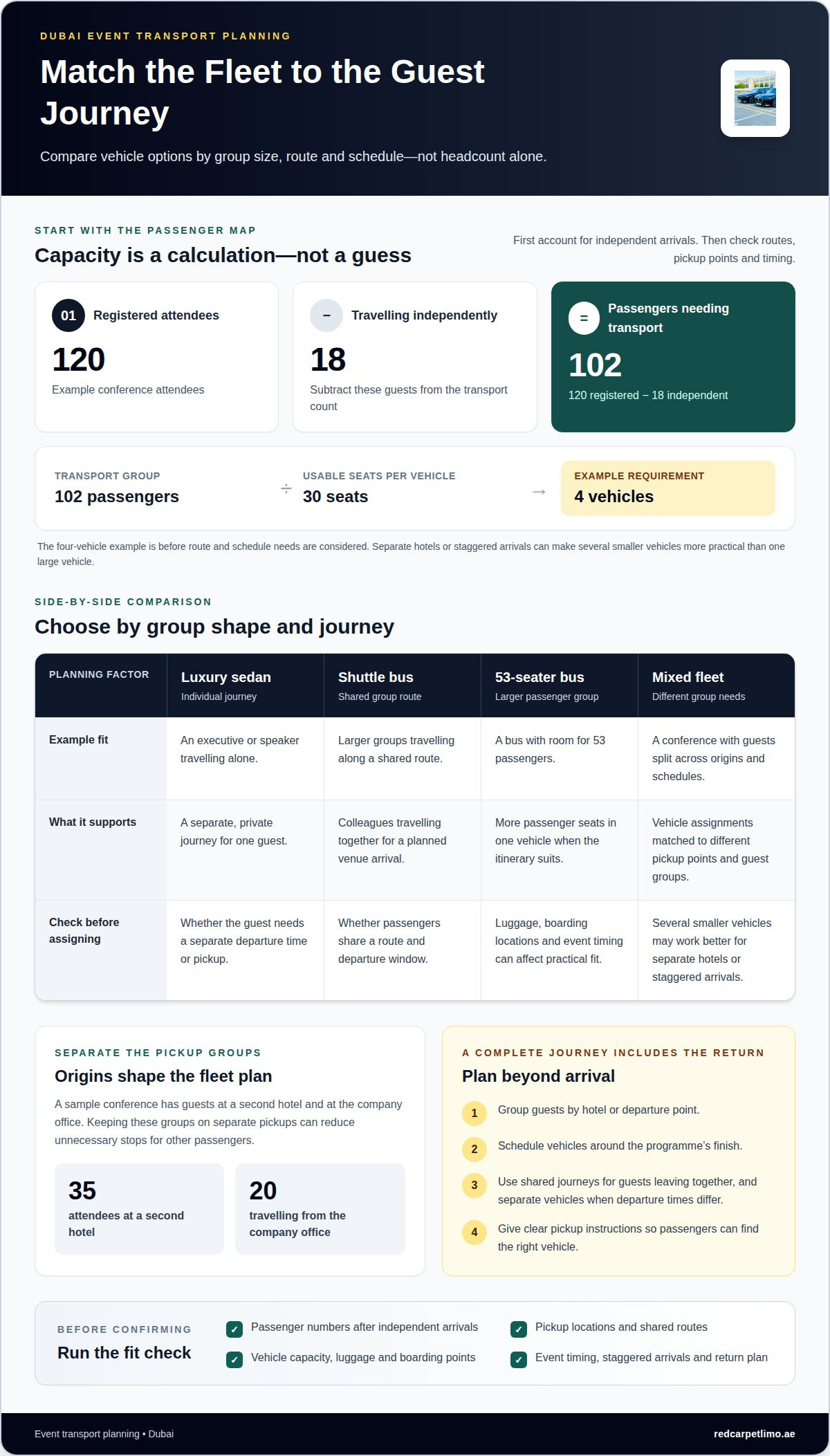
Start with a passenger map, not a vehicle booking. For a Dubai conference, group guests by hotel, arrival point, mobility needs and destination, then assign each pickup to a route. A 140-attendee event might include separate hotel, airport and office groups, each with different departure needs. This map helps the transport coordinator match vehicles to both passenger numbers and pickup points.
Next, calculate organised travel needs after accounting for independent arrivals. In one example, 120 registered attendees minus 18 travelling independently leaves 102 passengers requiring transport. Vehicles with 30 usable seats would require four vehicles for those passengers, before route and schedule needs are considered. That last step matters: separate hotels or staggered arrivals can make one large vehicle less practical than several smaller ones.
Capacity is only part of the match. A 53-seater luxury bus has room for 53 passengers, but luggage, boarding locations and the event schedule also shape the choice. For airport transfers, suitcases can affect usable space; for a short hotel-to-venue journey, passenger seating may matter more. A 140-person conference could therefore use a mix of vehicles rather than one uniform rental arrangement. A chauffeur fleet can be assessed by vehicle type and its fit for the group’s itinerary.
Smaller groups often suit luxury sedans, while shuttle buses suit larger groups travelling along shared routes. For example, an illustrative conference has 35 attendees at a second hotel and 20 travelling from the company office. Keeping those groups on separate pickups can reduce unnecessary stops for other passengers. A sedan can suit an executive or speaker travelling alone; a shuttle can bring colleagues together for a planned venue arrival.
Dinners and networking events need a return plan as well as an arrival plan. Group guests by hotel or departure point, then schedule vehicles around the programme’s finish. A shared journey may suit attendees leaving together, while separate vehicles can serve guests departing at different times. Clear pickup instructions help passengers find the right vehicle and avoid delaying departures.
Event transport follows planned routes and pickup times, grouping passengers who are travelling together; individual cars provide separate journeys. Public transport follows its own routes and timetable, so it may not connect each hotel, venue and event departure as directly.
Bus and passenger-transport requirements depend on the vehicle and service arrangement, so the operator should establish which Dubai requirements apply to the booking. Event permits are separate: some events require them depending on type and setup, and the Dubai Department of Economy and Tourism provides official application guidance.
Professional arrival, departure and event schedule coordination
For a Dubai conference, transport logistics should follow the programme, from the first hotel pickup to the final departure. A clear schedule keeps drivers, venue teams and guests working from the same plan.
How providers plan routes and use arrival buffers
Route planning starts with each guest group’s origin, pickup point and required arrival time. The transport coordinator maps hotel, office and venue stops against the event schedule, then assigns vehicles and drivers to suitable routes. A planned buffer gives guests time to move from drop-off to registration, rather than arriving at the venue as the session begins.
For a conference starting at 10:00 am, the sample schedule targets guest arrival around 9:25 am. Registration takes 20 minutes and ends at 9:45 am, leaving time to reach the conference room. This arrival target connects the route plan to the event’s actual first activity, not simply its advertised start.
Pickup instructions should identify the meeting point and a backup location in case security changes access. For example, naming the hotel entrance and an alternate nearby pickup point gives drivers and guests clear reference points. Specific directions reduce confusion at busy locations and help the coordinator adjust if access changes.
How providers help guests arrive punctually
A transport contact can align vehicle assignments with the event’s operating timeline. In one sample conference plan, the contact reviews final assignments at 6:45 am, and the first hotel vehicle departs at 8:30 am. The first guest groups arrive at 9:15 am and begin registration, linking the morning travel sequence to the programme.
Staggered arrivals work best when each group has a defined departure window, pickup location and vehicle assignment. The same schedule places the organising and registration teams on their way at 7:15 am, before vehicles move towards assigned hotels at 7:45 am. Guests begin boarding at 8:15 am, with remaining hotel groups boarding at 8:45 am and a second departure wave leaving at 9:00 am.
During the final approach, the transport contact checks for missing or delayed guests at 9:35 am. Attendees then move towards the conference room at 9:45 am. This sequence gives the team a defined point to identify delays and communicate with drivers, rather than relying on informal updates across separate pickup locations.
Departure planning matters too. For an evening event, organisers can offer more than one return window when the programme allows, and schedule vehicles to reach staging positions 30 minutes before closing. For coordinated corporate event journeys, aligning pickups, arrival buffers and return movements helps keep the guest experience composed.
Luxury event transfers
For a Dubai corporate event, luxury transport is more than a polished arrival. It shapes how speakers, executives and guests experience travel between the airport, hotel and venue. A coordinated plan can provide VIP groups with private, comfortable journeys while keeping travel aligned with the programme.
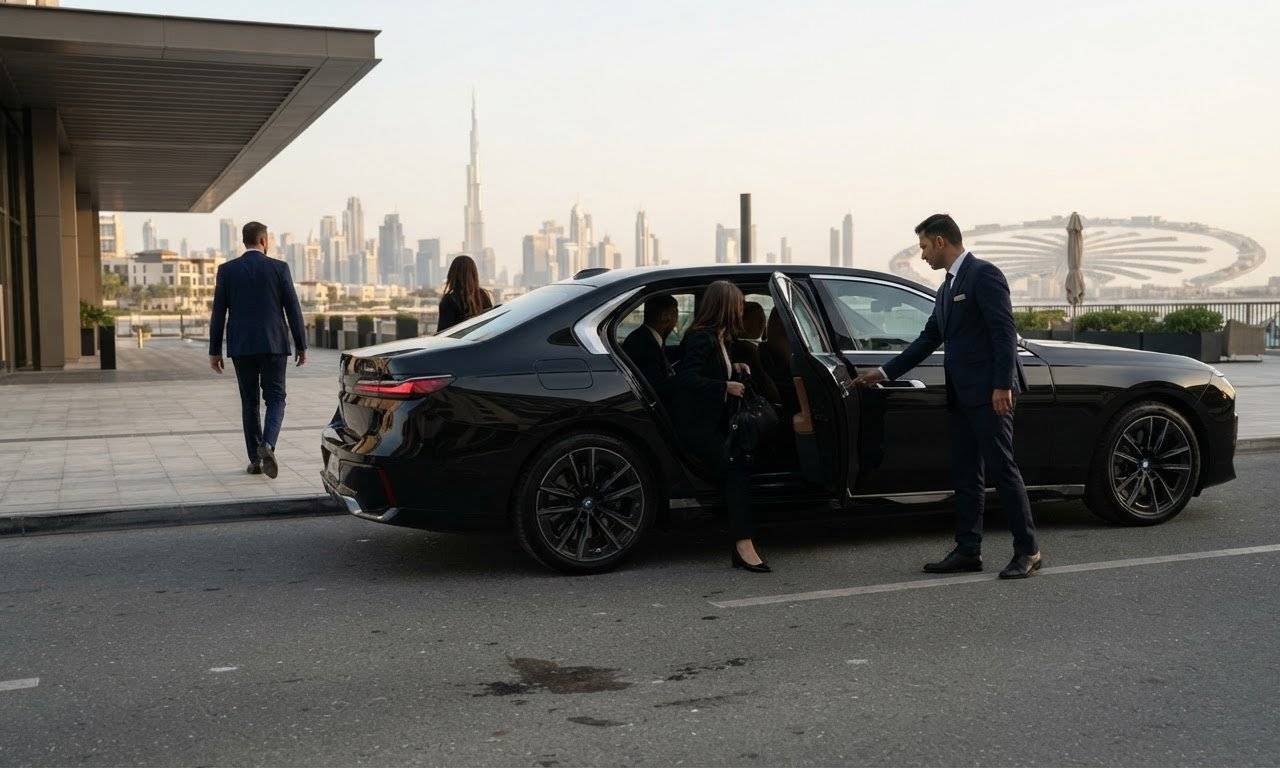
Executive cars suit individual speakers or senior guests who value privacy and a refined setting. A product launch, for example, may call for premium transport for media personnel and VIP attendees. Separate vehicles for key guests can support discreet arrivals without requiring everyone to travel together.
Luxury and group transport can work side by side. At a two-day conference, organisers might arrange private transfers for selected guests and shared journeys for attendees travelling between the same locations. Match each trip to its purpose: individual transfers for privacy, coordinated group journeys for a shared schedule.
For an afternoon programme with ten VIP speakers, the transport plan can align airport or hotel pickups with the event timetable. A designated transport contact can coordinate vehicle assignments, arrival points and guest messages. Clear directions tell each speaker where to meet the driver and where the vehicle will drop them, reducing uncertainty on a busy event day.
When assigning vehicles and planning boarding, account for guests’ mobility needs. Define the transport service’s safety and insurance arrangements; specific legal obligations depend on the vehicle and operation under applicable Dubai rules. Do not assume one vehicle setup will suit every guest or event.
Booking in advance helps organisers plan vehicle preferences and coordinate schedules before event journeys begin. For team-building activities at remote or outdoor locations, reliable, comfortable vehicles matter as much as presentation. Consider the route, destination access, passenger needs and return plan when arranging transport.
A practical luxury transfer plan starts with the guest experience, then matches vehicle choice to timing and purpose. For a product launch, that might mean discreet executive cars for VIPs and separate transport for media personnel. For an evening reception, it could mean coordinating arrivals with the programme and setting clear departure arrangements. In Dubai, thoughtful journeys create a refined experience without making transport a spectacle.
Which Dubai transport companies provide event transportation and group transfers?
In Dubai, event transport is handled by several provider types, each suited to different movements. Corporate event transport companies coordinate guest journeys across a programme. Chauffeur services focus on private executive travel, while bus and shuttle operators move larger groups along shared routes. The right fit depends on passenger numbers, vehicle needs, pickup locations and timing.
For a conference at Dubai World Trade Centre, organisers may need different arrangements for delegates, speakers and executives. A group transport service can coordinate shared journeys between hotels and the venue, while a chauffeur service can arrange separate trips for individual guests. If the event includes airport arrivals, the plan can connect Dubai International Airport with hotels and event locations.
Some Dubai transport services handle journeys between venues, airports and hotels. This matters when a programme spans multiple locations, such as a conference followed by a reception elsewhere. A planned schedule can connect these journeys instead of leaving each transition to separate arrangements.
Transport options vary by vehicle mix. Corporate event journeys can use luxury sedans for individual guests and larger vehicles for groups. For a product launch, organisers could arrange executive cars for selected guests and shared journeys for attendees travelling together. Match each vehicle to the purpose of the trip rather than treating every group identically.
Some corporate fleets include hybrid and electric vehicles. Suitability depends on the route, passenger requirements and vehicle needs. Review the listed fleet categories when planning, distinguishing private executive journeys from shared group transfers rather than assuming every vehicle suits every role.
For a multi-venue event, the coordination model matters as much as the vehicle category. A central transport contact can manage route assignments, pickup instructions and schedule changes. A single movement plan can connect the airport, hotel, venue and return journeys, with responsibilities clear for guests and event teams.
Useful planning details include the event schedule, passenger groups, pickup and drop-off points, luggage needs and accessibility considerations. These shape the service arrangement and vehicle allocation. For example, an airport group travelling with luggage may need a different setup from attendees going between a nearby hotel and conference venue.
Choose a provider type based on the transport task: group transport for shared journeys, chauffeur services for private executive trips, or corporate event transport for coordinated programmes. A clear brief links each guest group to a suitable vehicle, route and event location.
Red Carpet Limousine: Corporate Event Transportation
Red Carpet Limousine LLC provides Corporate Event Transportation for organisers coordinating guest movements across a Dubai event schedule. The service suits corporate programmes requiring planned transfers between venues, hotels and designated pickup points, with a composed experience for executives and attendees.
For VIP guests, the Vip&events service supports event-related travel, while Airport Transfers (DXB & AUH) connect arriving guests with their onward plans. Point-to-Point Transfers suit trips between specified locations, such as a hotel and event venue. Share guest numbers, pickup locations and the event timetable to plan transport around the programme.
For a corporate gathering, product launch or conference, Red Carpet Limousine LLC can be a natural transport partner when professional event journeys are part of the plan. Contact Red Carpet Limousine LLC to discuss transportation for your event.
Shape the guest experience from the first journey
Before finalising the programme, decide how you want guests to feel as they travel through the day. A transport brief can capture the tone of arrival, the privacy needs of key attendees and how journeys should adapt if the programme changes. This makes transportation solutions for event planners in Dubai part of the event experience, not simply a connection between locations.
Red Carpet Limousine offers Airport Transfers (DXB & AUH), Point-to-Point Transfers and Hourly Chauffeur Service for different event journeys. Share the event’s purpose, locations and preferred guest experience when planning, so the transport arrangement reflects the occasion and schedule.
Give your event travel a considered beginning. Contact Red Carpet Limousine to plan your event, and take the next step towards a composed, well-coordinated guest experience.
Frequently Asked Questions
Why Corporate Event Transportation Matters?
Corporate event transportation connects the guest experience with the event’s professional standards. Coordinated arrivals can reduce uncertainty for visiting delegates, while planned travel between venues helps keep the programme moving. For example, transportation solutions for event planners in Dubai can include separate arrangements for executives, speakers and attendees, based on their privacy and schedule needs. A clear plan also assigns responsibility for guest communications and pickup coordination.
What transportation options are available for event planners in Dubai?
Event planners can arrange private chauffeur journeys, executive sedans, group transport, airport transfers and point-to-point trips, depending on the itinerary. A speaker travelling alone may need a private car, while attendees leaving from the same hotel could share a vehicle. For a programme with several stops, an hourly chauffeur service can cover travel between locations during the booked period. Choose vehicles according to passenger needs, luggage, pickup access and whether guests travel together or separately.
How can event planners book professionally coordinated airport transfers for attendees in Dubai?
For coordinated airport transfers, provide the travel date, flight details, passenger names, luggage needs and onward destination in one itinerary. Red Carpet Limousine LLC provides airport transfers to DXB, with live flight tracking and meet-and-greet at the airport. The booking process uses the itinerary to prepare a written quote; the chauffeur’s name, photo and vehicle plate details are provided before pickup. State each arrival group’s hotel destination clearly to organise onward journeys.
How far in advance should event planners book transport in Dubai?
Start planning once the event date, venue and main travel schedule are established. Early planning leaves time to account for guests’ different origins, vehicle preferences and programme changes. For a conference with international arrivals, begin when flight and hotel information starts to settle, then update the itinerary as details change. Share a workable schedule early rather than waiting until every guest’s plans are final.
What routes and traffic conditions should event planners consider for major Dubai venues?
Route planning should account for pickup areas, venue access, event start times and scheduled road or security changes. Dubai traffic can affect journeys, so consider alternate approaches and suitable vehicle staging points. At venues with controlled access, guest drop-off and vehicle waiting locations may differ. Give drivers and guests precise venue instructions to avoid confusion near entrances and support orderly arrivals.
What are the risks and contingency plans for event transport in Dubai?
Common planning risks include traffic delays, changes to venue access, missed pickups and guests arriving at different times. A useful contingency plan names primary and backup meeting points, assigns a transport contact and gives guests a clear way to receive updates. For an evening programme, set departure windows that reflect how guests will leave. If the schedule shifts, the coordinator can share revised pickup instructions with drivers and passengers.

Disclaimer
The information provided on this website is for general informational purposes only. While Red Carpet Limousine LLC strives to keep all content accurate and up to date, vehicle availability, pricing, offers, and service details may change without notice. Images shown are for illustrative purposes only and actual vehicles may vary. For the latest information and confirmed bookings, please contact Red Carpet Limousine LLC directly.